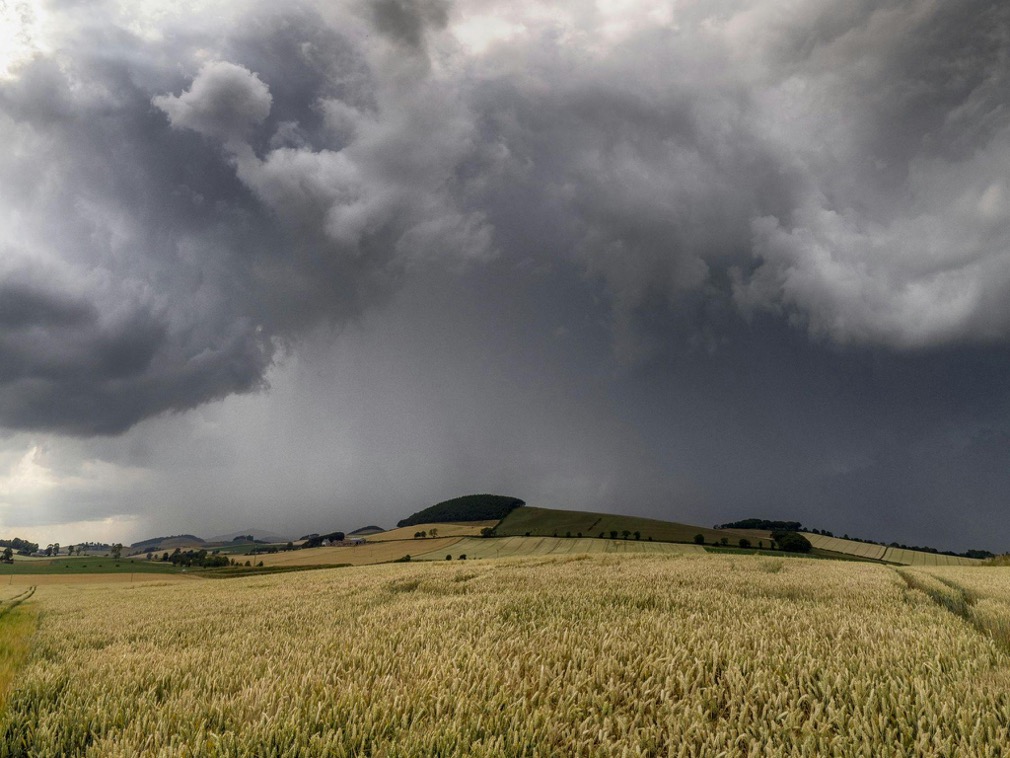
In this article, we explore how agricultural research institutes and Omdena collaborated to create AI-powered solutions that predict extreme weather patterns and provide early warnings, highlighting the growing role of AI in agriculture in helping farmers adapt to climate change
Watch the Webinar
See how AI and deep learning can improve weather forecasting and help farmers prepare for extreme weather.
In this webinar, we explore how AI models use weather data to improve predictions, identify extreme weather patterns, and support better-informed agricultural decisions, along with the key challenges and practical applications of AI-powered weather forecasting.
Weather Forecasting for Agriculture: The Challenge
Climate change presents a significant and multifaceted challenge for the agricultural community. The growing frequency and intensity of extreme weather events from prolonged droughts to devastating floods and scorching heat waves—pose serious risks to crops, livestock, and farm incomes. These disruptions can derail planting and harvesting schedules, diminish soil health, reduce yields, and in severe cases, lead to widespread crop failures that threaten the livelihoods of farming families.
In this increasingly unpredictable environment, farmers need reliable information and advanced tools that not only help them anticipate and prepare for extreme events but also support long-term resilience against shifting climate patterns. Accurate weather forecasting for agriculture plays a vital role in guiding day-to-day decisions, optimizing resource use, and safeguarding food production. By enabling farmers to act early and minimize risks, these insights strengthen sustainable farming practices, protect food security, and empower agricultural communities to adapt and thrive despite the challenges of a changing climate.
AI Weather Prediction: The Solution
To address these challenges, an agricultural research institute partnered with Omdena to develop a comprehensive AI-powered solution. This system leverages machine learning to predict extreme weather events with greater accuracy and equips farmers with actionable insights to adjust their practices in real time. In essence, it seamlessly combines advanced AI-driven weather prediction with practical, climate-resilient farming guidance, helping farmers make informed decisions and better withstand the impacts of a changing climate.
Similar AI-driven climate adaptation efforts are already being adopted by many organizations leading sustainable agriculture, where predictive insights are helping farmers manage climate risks while improving long-term resilience.
Technical Underpinnings
The core of the solution lies in a multi‑layered machine‑learning approach:
Data preprocessing and feature engineering. Historical weather data — including temperature, precipitation, humidity and wind patterns — is collected from various sources (detailed below). Climate models incorporating future projections and global trends are integrated alongside additional relevant data such as soil characteristics, crop types and historical yield information. This data undergoes rigorous cleaning, normalization and transformation to ensure its quality and suitability for the algorithms.
Extreme weather prediction. Long Short‑Term Memory (LSTM) networks, a type of recurrent neural network, excel at capturing temporal dependencies and identifying patterns in sequential data such as weather observations. These LSTMs are trained on the historical and projected climate data to predict the likelihood and severity of heat waves, droughts and floods with lead times suited to agricultural decision‑making.
Recommendation generation. Based on the predicted scenarios and local context, supervised learning algorithms like Support Vector Machines and Random Forests classify situations and generate tailored recommendations. These may include crop selection — suggesting alternative varieties with higher tolerance to specific weather extremes — optimizing planting and harvesting schedules, or water‑management strategies that conserve water during droughts or protect crops from flooding.
Data Integration and Training
The solution leverages various data sources to train its models:
Historical weather data from weather stations, satellites and reanalysis datasets.
Global and regional climate models from reputable institutions.
On‑farm data, when available, including crop types, soil characteristics and historical yield information.
A robust data‑integration framework ensures seamless merging of data from diverse sources, addressing potential inconsistencies and formatting variations. The integrated data is then used to train the machine‑learning models through supervised learning techniques, where historical data with known outcomes guides the model to learn and predict future scenarios.
By combining advanced machine‑learning techniques with comprehensive data integration, this AI‑powered solution equips farmers with crucial insights to navigate extreme weather and adopt climate‑resilient farming practices.
Results
Field trials show that the AI-powered solution has been highly effective in helping farmers adapt to climate change and reduce crop losses. Those who implemented the system reported a 15 percent increase in crop yields and a 20 percent reduction in losses caused by extreme weather events. These results highlight the solution’s potential to strengthen climate resilience and improve agricultural productivity at scale. These outcomes align closely with recent advances in AI-based crop yield prediction, where machine-learning models are increasingly used to connect weather forecasts with yield optimization under climate stress.
AI‑Powered Solution to Predict Extreme Weather Patterns and Help Farmers Adapt to Climate Change
Benefits
The AI‑powered solution to predict extreme weather patterns and assist farmers offers numerous advantages, enhancing agricultural resilience and profitability:
Improved accuracy of weather forecasts. By utilizing advanced algorithms and vast datasets, this AI solution significantly enhances the precision of weather predictions. Accurate forecasts allow farmers to make informed decisions about planting, harvesting and managing crops, minimizing the risks associated with unpredictable weather.
Tailored recommendations on adapting farming practices. The system provides customized advice based on specific farm locations, crop types and local weather patterns. Guidance may include optimal planting dates, suitable crop varieties resistant to expected weather extremes, irrigation management to conserve water during droughts or strategies to protect crops from flooding. These recommendations help farmers adjust proactively, reducing the potential impact of extreme conditions. Such adaptive recommendations are a core pillar of modern precision agriculture, where real-time data, predictive analytics, and localized insights help farmers respond dynamically to climate variability.
Reduced crop losses. Implementing the AI‑powered system’s recommendations significantly decreases the likelihood of crop damage or loss caused by adverse weather. Early warnings and adaptive strategies enable farmers to take preventive measures, such as reinforcing structures to withstand high winds or adjusting irrigation schedules in anticipation of drought or excessive rainfall.
Increased crop yields. Precise weather forecasts and adaptation strategies help optimize growing conditions. Effective use of resources such as water and fertilizers and better timing of activities contribute to higher productivity and yields even under challenging climate conditions.
Higher farm incomes. Higher yields and reduced losses naturally lead to increased farm incomes. By maximizing efficiency and output through AI‑guided decisions, farmers achieve better financial results, contributing to the sector’s economic stability and growth.
Enhanced resilience to climate change. Finally, the AI solution plays a crucial role in building long‑term resilience. By equipping farmers with the knowledge and tools to adapt dynamically to changing weather patterns, it helps ensure sustainable agricultural practices, benefiting individual farmers and supporting global food security in the face of climate variability.
Real‑World Project: Forecasting Weather With Deep Learning
Forecasting Weather With Deep Learning to Improve Weather Forecast Models
Omdena collaborated with Rebase Energy to enhance the precision of weather forecasts, aiming to support industries such as agriculture with improved predictive models. This initiative focuses on using Rebase’s extensive weather data so that models learn to identify patterns and make more accurate predictions about future conditions. For agriculture, this helps farmers make timely decisions regarding planting and harvesting, leading to increased yields and decreased waste.
Lessons Learned
Several key lessons emerge from this case study:
AI‑powered solutions can be very effective in helping farmers adapt to climate change.
It is important to collect and prepare a large, diverse dataset of historical weather data, climate models and other relevant sources to train accurate and effective machine‑learning models.
Models should be interpretable so that farmers can understand how they work and trust their predictions.
The AI‑powered solution should be easy to use for farmers with a variety of skill levels.
Conclusion
The AI-powered solution developed by the agricultural research institute and Omdena is a valuable tool for farmers navigating the growing challenges of climate change. By improving the accuracy of weather forecasts, delivering tailored and timely recommendations, reducing crop losses, and boosting yields, it provides practical support for climate-resilient farming and improves overall farm incomes.
Moreover, by integrating advanced weather forecasting, AI-driven prediction models, and robust data systems, the solution gives farmers the confidence to make informed decisions even during unpredictable conditions. This combination not only strengthens resilience against extreme weather events but also encourages smarter resource management, long-term planning, and sustainable agricultural growth. Ultimately, it paves the way for a more secure, productive, and future of farming powered by intelligent technologies for farming communities.
FAQ
How does AI help predict extreme weather for agriculture?
AI analyzes large datasets—such as historical weather data, satellite imagery, and climate models—to detect patterns linked to extreme weather. Machine-learning models like LSTMs can forecast events such as heat waves, droughts, and heavy rainfall earlier and more accurately than traditional systems.
How can AI weather prediction help farmers reduce crop losses?
AI systems provide early warnings and tailored recommendations—such as irrigation adjustments, crop protection steps, or changes in planting schedules. Acting early helps farmers minimize damage from extreme weather, leading to fewer losses.
What data is used to train AI models for weather forecasting?
AI weather models typically use: Historical weather station data Satellite data Reanalysis climate datasets Soil and crop information Long-term climate projections These diverse sources improve accuracy and location-specific insights.
Can AI improve crop yields despite climate change?
Yes. By predicting weather patterns and offering farm-specific guidance, AI helps farmers optimize planting windows, select resilient crop varieties, and manage water and fertilizers more efficiently. Many applications report yield increases of 10–20%.
Is AI-based weather forecasting more accurate than traditional methods?
In many cases, yes. Traditional models rely heavily on physics-based simulations, while AI enhances accuracy by learning from millions of past data points. Hybrid systems that combine both approaches deliver the highest precision.
How do farmers use AI recommendations in day-to-day decisions?
AI tools provide actionable suggestions on: When to plant or harvest How to adjust irrigation Which crops or varieties to choose How to protect crops before extreme weather Farmers receive alerts through mobile apps, dashboards, or SMS.
Can smallholder farmers benefit from AI weather solutions?
Absolutely. Many AI tools are designed to be lightweight, mobile-friendly, and cost-effective. Even basic forecasts and recommendations delivered through smartphones can significantly improve farm productivity and reduce climate vulnerability.
Share this article
Share on LinkedIn, send by email, or copy the direct link.