
AI Innovation Projects
- Teams of 50 collaborators
- Data collection and engineering
- Closed-source or open-source
- Dependent on project requirements
Explore Omdena's collaborative AI projects across climate, health, agriculture, public services, and more.
Want to collaborate on an AI project?
Apply to join a project or host one through Local Chapters and Impact Hubs.
Search project names, technical skills, or impact domains.
23 projects shown.
 AI Innovation Project
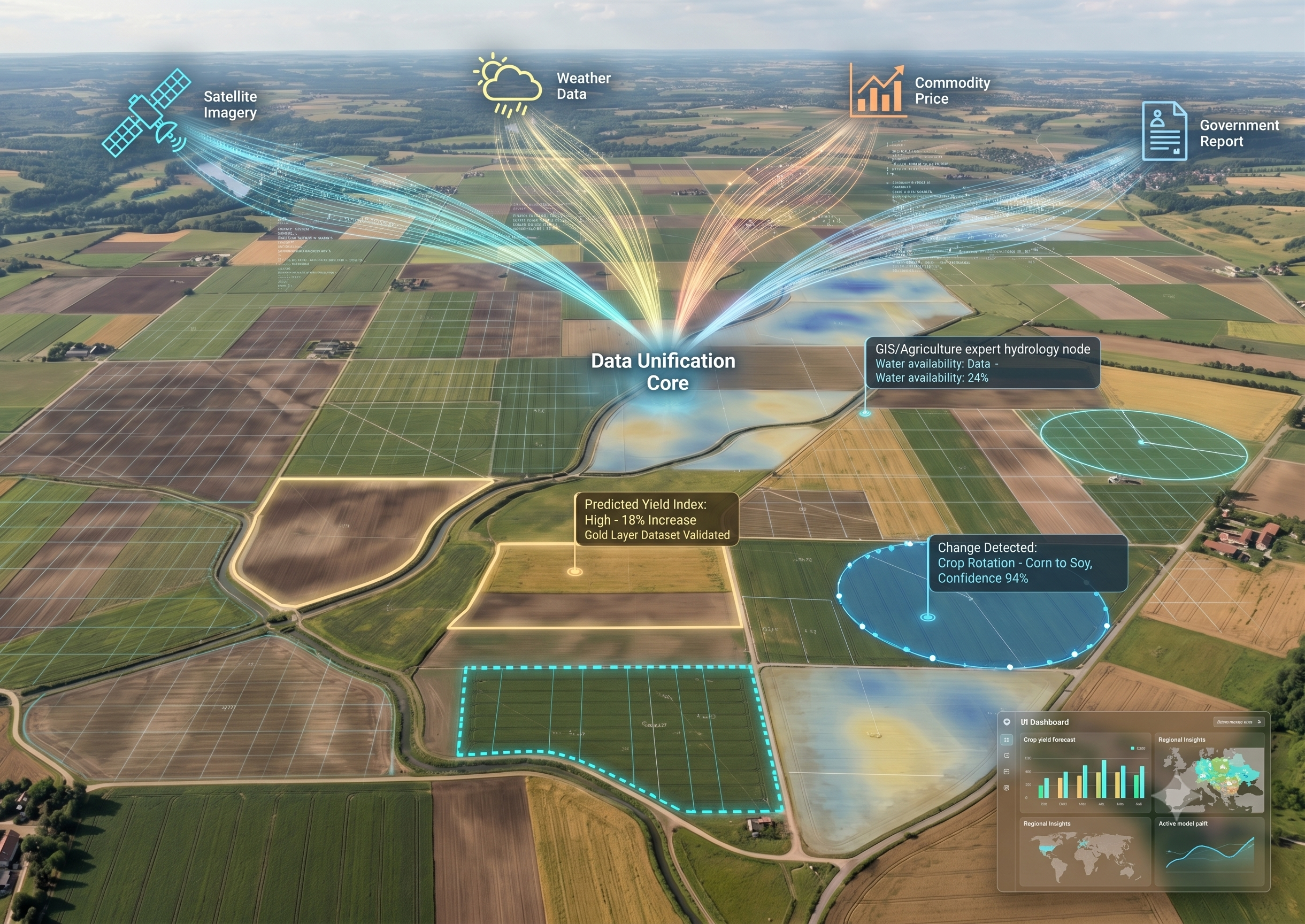
The problem Modern agriculture has access to more data than ever before,…
 AI Innovation Project
The problem Bhutan is one of the world’s most unique and sought-after…
 AI Innovation Project
The problem Bhutan has made meaningful progress in digital governance, yet citizens,…
Accessing public services is still a complex and frustrating process in many countries. Citizens often need to navigate multiple systems, fill out repetitive forms, and rely on manual steps that slow down the entire process. In many cases, digital platforms exist but are not intuitive, not accessible to everyone, or not designed around real user needs. Bhutan is a strong example of this challenge. While the country is moving toward digital transformation, many public services still involve fragmented processes, limited system integration, and barriers for users who are not comfortable with traditional digital interfaces. This creates friction for citizens, especially in rural areas where accessibility and usability are critical. Instead of jumping directly into building a complete solution, this project focuses on something more valuable: exploration and validation. The goal is to understand whether voice-enabled interaction, conversational AI, and agent-based workflows can realistically simplify how citizens request public services.
 AI Innovation Project
The problem Modern agriculture has access to more data than ever before,…
 AI Innovation Project
The problem Agricultural AI systems today are built on datasets that do…
 AI Innovation Project
The problem As Omdena scales increasingly complex, multi-repository and multi-team AI projects,…
 AI Innovation Project
Overview Large-scale AI software increasingly relies on agentic frameworks such as LangChain,…
 AI Innovation Project
Problem Statement AI systems emit many kinds of telemetry: API calls, model…
 AI Innovation Project
The problem Smallholder and medium-sized farms form the backbone of food production…
 AI Innovation Project
The problem Small and medium-sized enterprises (SMEs) face overwhelming barriers in implementing…
 AI Innovation Project
The problem Climate change is one of the most pressing global challenges,…
Climate change is one of the most pressing global challenges, leading to extreme weather events, rising sea levels, biodiversity loss, and resource scarcity. Bhutan is increasingly vulnerable to climate-related risks such as glacial lake outburst floods (GLOFs), changing monsoon patterns, and agricultural instability. These impacts are particularly pronounced in Bhutan’s rural and mountainous regions, where communities often lack the necessary resources, infrastructure, and early warning systems to effectively mitigate and adapt to these changes. Despite global efforts, addressing climate change remains difficult due to complex data requirements, slow response times, and the need for scalable solutions. Artificial Intelligence (AI) presents a transformative opportunity to tackle climate change. AI-powered solutions can enhance climate monitoring, predict environmental changes, and optimize resource management to support sustainability efforts—even in geographically challenging areas like Bhutan. However, implementing AI in climate action also presents challenges, such as ensuring data accuracy in remote regions, minimizing the energy consumption of AI models, and maintaining ethical transparency in decision-making.
 Top Talent Project
This is a paid opportunity. In order to be eligible to apply…
Rooted in Bhutan’s development philosophy of Gross National Happiness (GNH), which values a holistic and sustainable approach that reflects the country’s commitment to inclusive and compassionate innovation. In this challenge, we aim to build AI-powered solutions that provide continuous, personalized, and stigma-free mental health support. These solutions will ensure scalability to reach underserved populations while addressing challenges like data privacy, ethical use, bias elimination, and maintaining clinical effectiveness. While mental health is a growing global priority, this platform offers an opportunity to explore solutions that resonate universally, yet remain adaptable to diverse cultural and societal contexts. Bhutan sees this challenge as a timely and meaningful step toward contributing to global efforts while nurturing systems that align with its own values of well-being and equity.
Bangkok is notorious for its heavy traffic congestion, ranking among the most congested cities in the world. Rapid urbanization, high vehicle density, and unpredictable road incidents contribute to severe delays, economic losses, and increased pollution like PM2.5. The average commuter in Bangkok spends hours stuck in traffic, leading to inefficiencies in transportation and logistics.
The Education Funding Crisis in Kenya -Higher education serves as a crucial pathway to socioeconomic advancement.However, many Kenyan students face significant financial barriers that hinder their academic pursuits and future opportunities Financial Constraints:In the 2024/25 fiscal year, the Higher Education Loans Board (HELB) was allocated Ksh28.1 billion, a reduction from the previous year's Ksh31.89 billion. This budget can only support continuing students, leaving approximately 122,634 new university entrants without funding. Specifically, only Ksh2.4 billion is available for first-year students, creating a funding gap of Ksh11.4 billion. Consequently, 82.8% of incoming students may lack necessary financial support. \- Alternative Funding Challenges:Students often resort to community fundraising (Harambee) or personal loans, which typically come with high interest rates and inflexible repayment terms, exacerbating their financial burdens Global Context The struggle to finance higher education is a global issue, with various regions facing unique challenges \- United States & Europe:Student debt has escalated into a significant crisis. In the U.S., outstanding student loan debt surpassed $1.7 trillion in 2023, affecting over 45 million borrowers. Graduates often face decades-long repayment periods, limiting their financial independence and career choices \- Asia & Latin America:While some government subsidies exist, they are frequently insufficient. Middle and low-income students often find bank loans unaffordable due to high interest rates and stringent repayment conditions, limiting access to higher education These statistics underscore the urgent need for innovative, equitable, and sustainable solutions to address the higher education funding crisis, both in Kenya and globally
In the evolving realm of mental health, recognizing holistic well-being is paramount amid the intricacies of the knowledge economy. The growing significance of cognitive and emotional skills, essential for enduring competitiveness, extends beyond professional realms to empower a diverse, remote workforce and tackle complex mental health challenges like imposter syndrome. Conventional coaching methods fall short, prompting the need for an innovative approach. Tailored to elevate emotional intelligence, resilience, and more, this forward-looking solution seamlessly integrates diverse learning tools. It goes beyond norms, offering personalized strategies through spaced-out notifications, self-reflection, and community engagement. Serving as a comprehensive repository, it provides actionable "recipes" to guide individuals on unique journeys toward mental health goals. This pioneering approach aligns with the nuanced understanding of mental health in contemporary society, ushering in a transformative era.
The Port of Chancay, a crucial hub in Peru's foreign trade, faces challenges in its import and export processes. A chatbot powered by a Large Language Model (LLM) and Artificial Intelligence (AI) emerges as a promising solution to mitigate these issues. This advanced technology can significantly optimize the evaluation of foreign trade operations, providing accurate and near-instantaneous responses to user queries. By integrating a chatbot into the port's systems, paperwork would be streamlined, human errors reduced, and customer experience improved. In the long term, this project could become a regional benchmark, positioning the Port of Chancay as a smart and efficient logistics hub. In addition to optimizing internal processes, the chatbot could be used to gather valuable data on port operations, enabling administrators to make more informed and strategic decisions. The implementation of this technology would not only benefit stakeholders involved in foreign trade but also contribute to the country's economic development.
With increasing concerns over climate change, soil degradation, and water scarcity, sustainable agriculture is becoming essential for landowners. However, accessing personalized, science-backed recommendations remains a challenge. By leveraging Large Language Models (LLMs) and Retrieval-Augmented Generation (RAG), we can create a chatbot that delivers real-time, customized advice on sustainable farming. This chatbot will: - Guide landowners on crop selection, soil health, irrigation, and biodiversity management - Enhance responses with a custom knowledge database stored in a vector database Adapt recommendations based on user profiles and past interactions
Urban trees provide essential environmental, social, and economic benefits, including air purification, temperature regulation, biodiversity support, and aesthetic value. However, many cities, including Ibagué, Colombia, lack an updated and public monitoring system for their urban and rural trees. The absence of structured data on tree species, health status, threats, and maintenance history leads to poor decision-making in urban planning and conservation efforts. Additionally, without a publicly accessible platform, citizens have limited ways to report concerns about trees at risk, whether due to disease, improper pruning, or urban expansion. A robust digital platform can empower decision-makers, researchers, and citizens by providing real-time, data-driven insights into the status of the urban and rural tree population in Ibagué.
With the rise of digital media consumption in the Philippines, where over 80% of the population has internet access and more than 70% are active mobile internet users, social media plays a crucial role in information dissemination. However, this ease of access also comes with risks. Deepfake technology, which uses artificial intelligence to create hyper-realistic manipulated images and videos, has become a growing concern. Such technology can be weaponized to spread misinformation, manipulate public opinion, damage reputations, and influence political discourse. During elections, national events, and major news cycles, deepfake content has the potential to mislead the public, creating confusion and distrust in media, institutions, and government bodies. Despite existing fact-checking organizations such as VERA Files, Rappler's Fact Check, and the Philippine Center for Investigative Journalism, deep fake images and videos continue to spread unchecked.
Jordan hosts over 760,000 registered refugees, predominantly from Syria, with a significant portion being school-age children. Despite efforts to integrate refugee children into the education system, many face barriers such as language differences, interrupted schooling, and psychosocial challenges. The Jordanian education system is strained, with overcrowded classrooms and limited resources to address the diverse needs of refugee students.